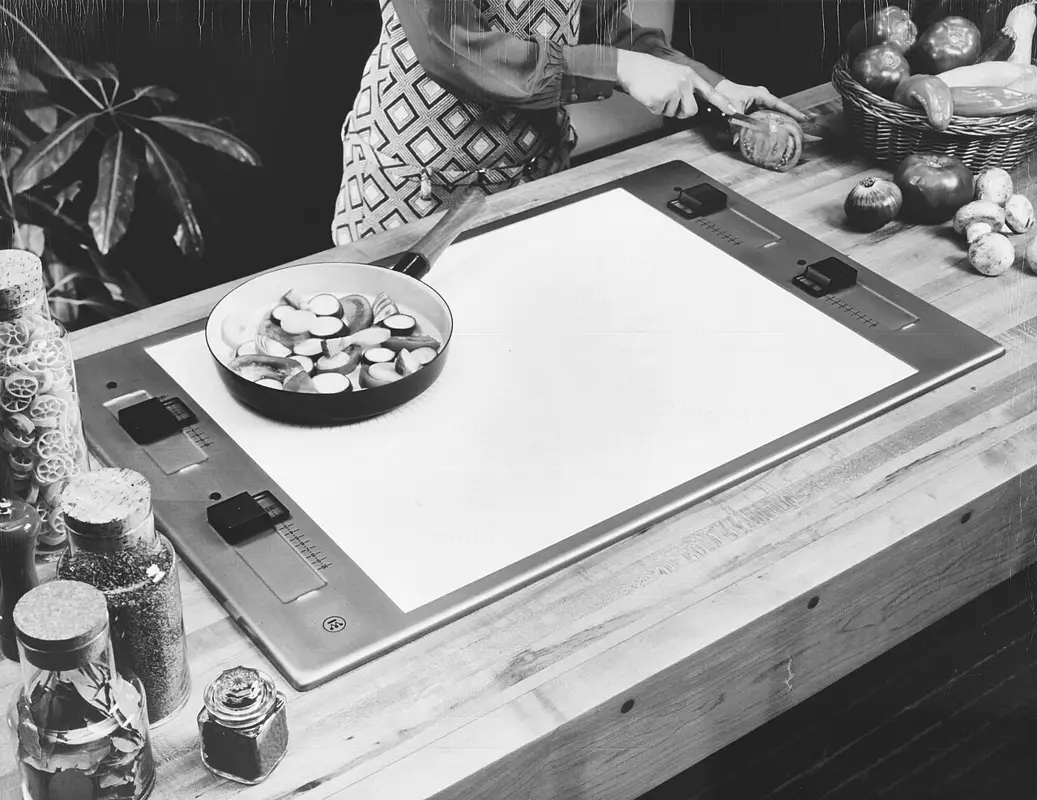
Image: "Cool Top 2 induction cooktop 1972.jpg" via Wikimedia Commons, CC BY-SA 4.0
Many Perth households are considering going all-electric: replacing gas cooktops, gas hot water and gas heaters with efficient electric alternatives, then running them on rooftop solar. Done well, this can reduce total energy bills, remove a gas supply charge and make the home simpler to run. This guide explains how to approach the change.
Why go all-electric?
A gas connection carries its own daily supply charge, separate from electricity. If you use gas only for a cooktop and occasional heating, that fixed charge can make gas expensive per unit. Removing gas eliminates the charge entirely.
Efficient electric appliances also pair naturally with solar. Midday generation can run hot water heat pumps, pre-heat or pre-cool rooms and cook lunch, all at very low cost.
Induction cooktops
Induction cooktops heat cookware directly using magnetic fields. They are fast, precise and efficient, and the glass surface stays cooler than gas or ceramic electric, which helps with safety and cleaning. They also remove combustion from the kitchen, improving indoor air quality.
You may need induction-compatible cookware. A simple test: if a magnet sticks firmly to the bottom of a pan, it will work. Most cooktops need a dedicated circuit, often 32 amps, so an electrician should check your switchboard.
Heat pump hot water
Gas storage and instantaneous hot water systems are common in Perth. A heat pump water heater uses electricity efficiently, typically about a third of the energy of a resistive element. Set it to run in the middle of the day and it can run largely on solar.
Plan the location carefully. Heat pumps have a fan and compressor, so place them away from bedrooms and neighbours' windows, with good airflow.
Heating and cooling
Reverse-cycle air conditioners provide both heating and cooling far more efficiently than gas heaters or resistive electric heaters. If you already have a reverse-cycle system for summer, using it for winter heating may allow you to remove gas heaters entirely.
Sizing solar for an all-electric home
Going all-electric increases electricity use, so consider whether your solar system needs to grow. A typical household might add a few kilowatt-hours per day from hot water and cooking. A larger solar array, and possibly a battery for evening cooking and heating, helps absorb the extra load.
Looking at a 10kW solar panel system sized for larger households can help you picture how an all-electric home's demand might be covered.
Timing the switch
You do not have to change everything at once. Many households replace appliances as they reach end of life:
- Hot water first, since it is often the largest gas use.
- Heating next, using reverse-cycle air conditioning.
- Cooking last, when renovating or when the gas cooktop fails.
Once the final gas appliance is gone, contact your gas retailer to close the account, and ask about having the meter removed or capped.
Electrical capacity
All-electric homes draw more power at peak times. An electrician should check that your main switch, switchboard and supply can handle the extra load. Single-phase homes can usually manage an all-electric conversion with sensible planning, but large homes with many appliances may benefit from three-phase supply.
Using solar wisely
Cook big meals in the middle of the day where possible, run hot water heating in solar hours, and pre-heat the home in winter afternoons. A battery can cover evening cooking and heating once solar finishes.
People who have made the switch often share their experiences online, and community profiles such as the Solar Energy Perth member profile on meat-inform.com are one place where homeowners compare results. Use these as general guidance.
Costs and incentives
Induction cooktops, heat pumps and reverse-cycle air conditioners vary widely in price. Factor in installation and electrical upgrades. From time to time, government programs support efficient appliances, so check current offers before buying.
Practical tips
- Check gas appliance age and plan replacements over time.
- Get electrical upgrades done in one visit where possible.
- Keep receipts and manuals for warranty purposes.
- Monitor bills before and after each change to see savings.
Getting advice
When planning all-electric upgrades, consider your solar system and switchboard together. A local business such as local Perth solar and battery installer Fusion Sun Solar can assess whether your current system suits new loads, and recommend upgrades if needed.
Frequently Asked Questions
Can I keep my gas cooktop and remove everything else? Yes, but you will still pay the gas supply charge. Many households find the charge is the main reason to remove gas entirely.
Is induction safe for children? Induction surfaces stay cooler than gas or ceramic, and many cooktops include child locks.
Will an all-electric home need a battery? Not necessarily, but a battery helps cover evening cooking and heating once solar finishes.
Doing the Switch in Stages
Few households replace every gas appliance at once. A staged plan spreads the cost and lets you learn how your usage changes. Many Perth homes start with hot water, because a heat pump water heater can be timed to run in the middle of the day when solar output is high. Next comes cooking, often when an old cooktop needs replacing anyway. Space heating is usually last, as reverse cycle air conditioners already handle much of the winter load in Perth.
Before removing the final gas appliance, ask your gas retailer how to close the account and whether the meter will be removed or made safe. Some households keep a connection for a while, but the daily supply charge continues until the account is closed.
Check your switchboard capacity early. An induction cooktop, a heat pump and an EV charger on the same supply can strain an older board or a single-phase connection. A licensed electrician can tell you whether load management or an upgrade is needed. Planning this before you buy appliances avoids rushed decisions, and it gives your solar designer a clear picture of the future load the system must support.
Summary
Going all-electric removes gas supply charges and pairs well with solar. Replace gas hot water with a heat pump, use reverse-cycle air conditioning for heating, switch to induction cooking and size your solar to suit. Planned over time, the change can make a Perth home cheaper and cleaner to run.